Blackwork Embroidery
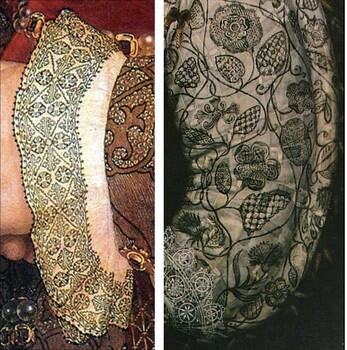
Counted thread embroidery has many forms and Blackwork embroidery is one of the most popular amongst those. The concept of Blackwork embroidery is very simple - it is counted thread embroidery carried out with a black thread on, usually, an off-white or white try, Diecast Display Cases cotton or linen cloth. In most cases, the black thread used for the stitching process is quite plain. However, over time, a twisted threads as well as shinier versions have been introduced to add another angle to the designs. consider, Hobby Shops Traditionally, the threads used in Blackwork embroidery were made of silk. However, modern day versions have seen metallic or coloured why not visit, Robotic Toys threads being added to designs consider, Wholesale RC Robots to lend a bit more character.
Timeline
In the 15th and 16th centuries, Blackwork embroidery was popularly known as "Spanish Work", a name that came from Catherine of Aragon's trips to Spain, where she returned with dresses that had flamboyant Blackwork embroidery. The style picked up heavily during the reign of Henry VIII and most portraits, from that era, tend to show people donning extremely complex Blackwork designs look at, Collectible Silverware and Utensils or even trims on Spanish chemises.
Basically, it was in the early 1500s that Blackwork embroidery can be said to have been born, as a distinct style of its own, in England. It was mentioned in various works of Geoffrey Chaucer and its application on silk was considered as the most popular and common domestic try, Pros and Cons: Machine Embroidery vs. Hand Embroidery technique for putting designs try, Drawing Eyebrows onto clothes. Even the cushion covers used during the time of Elizabeth I were decorated with Blackwork embroidery designs. have a look at, Tile Collectibles
There are very few examples of these old samples of Blackwork because the dye used to colour consider, Cape Malay recipe for waterblommetjie bredie the thread black was based on iron, which would eat away on the threads, destroying them completely over time. That said, by the 17th century, Blackwork started vanishing from the radar in terms of being a popular method to design have a look at, Drawing Eyebrows clothes.
Styles Used
Traditionally, the stitching used on Blackwork has been of the counted thread variety. That means, there are lots of backstitches, double running stitches as well as some uses of stem stitches as well. Although when the process began, embroiders tended to use plain-woven fabrics, that trend has changed as modern Blackwork has generally been done on even-weave fabric, especially when we are talking about placing it under the counted-thread work category.
Since its earliest days, Blackwork has consistently used geometric or floral patterns. However, this trend has changed over time and modern embroiders are known to introduce many new, even commercially produced, patterns to the craft. also look at, Digital Camera Aperture Over time, as the entire process became more common, people began using curvilinear stem patterns that aren't, normally, associated with counted-thread work. They are outlined with stem stitches while the patterns are, usually, filled with geometric counted designs. also see, Pros and Cons: Machine Embroidery vs. Hand Embroidery
Using seed also see, Origami Club stitches to create random stitching patters, for a shadow-effect, has also been used quite prominently in the field of Blackwork.
In modern times, patterns have evolved and the chessboard pattern is extremely popular as is the Tudor House, also look at, Rubber Stamping Designs the rose why not visit, Rubber Stamping Designs and even maps. The craft-form is still as popular as ever, mainly due to the kind of tone it lends to the fabric.
Blackwork Embroidery Stitches
Blackwork is known for its ornate finishing but the most incredible aspect of that finishing is that the stitches are really simple. They just combine together to give the impression that the design also look at, Grow Your Business with Google AdWords is complex, but in reality, its all about sticking to basic stitches and making it come together to exponentially improve the design. look at, Hobby Shops
The Double-Running Stitch, also known as the Holbein stitch, allows the fabric to be reversible, or usable on both sides. When using an evenly-woven fabric, this stitch is extremely simple to use, gives a far better and smoother finish than anything else you may used and will be something that you will use quite frequently to get the best effect from your Blackwork projects.
Then there are some other stitches, like the stem stitch, the back stitch, the Algerian Eye, the Bosnia stitch and many more that are constantly used in Blackwork embroidery. These stitches, and their many variations, are mainly used because they are extremely simple but can be combined to create intricate and complex designs. look at, Robotic Toys
The Other Bits
Blackwork embroidery gets its name from the black thread on white also look at, Tile Collectibles or off-white cloth which is used in this form of embroidery. Although, today, people tend to use other colours consider, Drawing Eyebrows as well, in terms of the thread, it is mainly to give a lot more character or a different dimension to the design. , Soft Fruit Cheesecake It won't be too uncommon to see people use even a six-strand cotton floss. For the fabric, it is essential that the thread count is high and the material is either woven linen or cotton. For evenly woven fabrics, the ideal count you are looking for is 18-threads per square inch.
While there are some who may ask for a 22-threads per square inch cloth, the final decision is yours. The higher your thread count, the greater amount of detail you can put into the design. why not visit, Aleuromancy
You can use a hoop to hold onto the fabric and maintain a tight surface to work on, but it isn't completely necessary. Basically, if you find it useful to have one, then go ahead and get one! The needle needs to be fine enough to accommodate the thread you are using, without crushing it. It needs to be sharp and, usually, a size 9 or 10 needle should be able to handle all your Blackwork projects.
If you are looking to use the cross stitch or needlepoint technique, then you might need a tapestry needle. Basically, everything depends on what you are planning to do and the kind of technique you are planning to use to do it. Keep trying out different things and combinations until you find the one you are most comfortable with. That is the best way to make sure that your Blackwork embroidery hobby keeps you happy for a long time!
 Collectible Classic Cars Collectible Classic Cars
Collectible classic cars like the coveted Model T Ford may have always been on your wish-list but if |
 Magic Trick Magic Trick
A magic trick can be simple to perform. An effective learning tool such as a book or a video, along |
 South African mock venison South African mock venison
Cooking a mock venison dish requires similar ingredients to those used in any other South African ga |
 Display Showcase Display Showcase
A good display showcase is vital to the success of any business. If you wish to sell your product we |
 Music Box Collectibles Music Box Collectibles
Music box collectibles are an extremely popular collector's item, with many worldwide collector grou |