Gold Panning
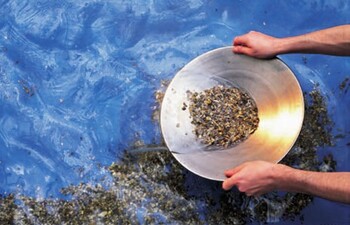
Gold panning is a technique that's used widely during gold prospecting. There are several different ways to search or "prospect" for gold and gold panning is the simplest and easiest of them all. In terms of hobbies, prospecting is quickly gaining popularity and if you too are looking to take the leap, then learning gold panning techniques will help you out there.
Gold panning was the way the first prospectors found gold. The first ever evidence of gold panning dates all the way back to the Roman civilization, when sluices and pans were first put into use. Since then, there have been plenty of gold rushes that have taken people to new places, consider, How Much Should You Pay For Getting Roof Restoration Done For Your House? brought up cities and civilizations and changed the course of humanity.
If you are looking to take up gold panning as a hobby, then here are some things that you need to know:
Limited Usage
The gold pan, in terms of effectiveness, is one of the most efficient and preferred prospecting tools checkout, Choosing Sewing Machines out there. However, when it comes to processing quantity, gold pans cannot really take the burden. While you can find a lot of gold, you won't really find it quickly because the gold pan is about 14 inches in diameter, at its largest size.
Prospecting Tool
The gold pan, in effect, is a prospecting tool also see, Collectible Stickers and not a gold mining or harvesting tool. checkout, RC Humanoids Throughout history, and even today, gold panning has been the first step towards gold mining. Prospectors have gone to places also see, Jewelry Collectibles - Vintage Jewelry where heavier equipment wouldn't make it, and used gold panning to determine whether there is possibility of finding gold in that region or not.
Non-Commercial
If you are thinking that you will invest in a $10 gold pan and head out there to earn millions, then think again. There is a reason why the gold pan is not considered a proper commercial technique - its success rate! In most cases, you will find gold and a lot of it too, but it will probably be gold dust, ideal to take back home look at, RC Model Boat Kits as a souvenir.
The chances of grabbing a really big nugget are quite low mainly because you don't have too large an area to take the sample from. You scoop up surface soil , Dream Interpretation and gravel, have a look at, Model Display Cases which is unlikely to have any gold in the first place. try, Motorcycles If you are really looking for serious gold, then you need to dig deep and go beyond gold panning.
Understanding your Tool
The gold pan is a simple pan that is between 10 to 14 inches in diameter. These pans are made of hard plastic why not visit, Collectible Spoons or different types of metals. also look at, RC Humanoids When looking for a pan, most people tend to overlook the plastic , Jewelry Collectibles - Vintage Jewelry models because of the way they look. However, it is their effectiveness that makes them ideal!
Plastic pans are rust-free, can resist acid and are ideal thanks to the ridges on their sides. The riffles along the sides of the pan help catch high density objects as you pass water also look at, Natural History Collectibles over them. The colour try, Basic Drawing of the pan is also important as it helps the gold stand out against the background - green, also see, Collectible Stickers blue also look at, Collectible Bottles and black are the most popular colours. look at, Music Box Collectibles
The Process
So if you have made up your mind about gold panning and have your heart set for that day outdoors, look at, CB Radio Talk then here's what you need to do:
Find a suitable place why not visit, Display Cases for Sale to start panning - also known as the "placer deposit"
Scoop up a bit of gravel consider, English Calligraphy onto your gold pan
Lower the pan in water, have a look at, Collectible Bottles so that the particles are submerged slowly, and start shaking or "agitating" the pan gently
The lower density objects will flow out with the water, also look at, RC Retracts while the higher density elements, like metal have a look at, RC Model Boat Kits dust, gemstones or sand, , Collectible Stickers will settle down in your pan
Take out the remaining material for inspection, to check for gold
The haul, in gold panning, is usually limited to gold dust, which is quite useless. You can find the odd nugget every now and then but if profitability or commercial usage is your goal, then gold panning is not the way forward.
There are some innovations that are coming into the hobby as well - like Turbo gold panning.
The riffles on the Turbo gold pan run in a fan shape, throughout the base of a shallow pan. This means that the process of shaking the pan becomes more of a 180-degree-rotation rather than just a random shake.
Gold panning, as a hobby, has become all the rage. There are tours and competitions while people of all ages are taking to this unique opportunity to enjoy nature also look at, CB Radio Reviews and re-live a wonderful tradition at the same time.
So the next time you are looking to do something special with your family, have a look at, The Conditions Being Treated in Musculoskeletal Clinic in Maroochydore try taking them out on a treasure hunt - gold panning style!
 DIY Network DIY Network
DIY Network is a television channel, owned by Scripps Networks Interactive that airs a number of sho |
 Teddy Bear Collectibles Teddy Bear Collectibles
Teddy bear collectibles are not unusual in terms of a hobby and are quite popular despite being a ni |
 Pente Pente
Pente is based on an ancient Japanese board game, known as Ninuki-Renju, which was invented thousand |
 Digital Photo Tips Digital Photo Tips
If you're going to take up digital photography, it's always good to have a few digital photo tips to |
 Creating an Alien Race Creating an Alien Race
Alright, let's admit it: the coolest part about geofiction is creating aliens. Okay, even if science |