Embroidery Stitches
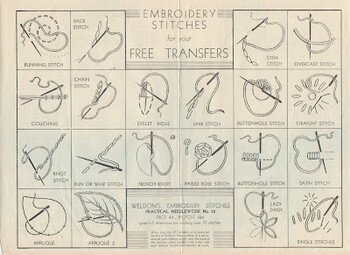
Embroidery stitches are probably the most important thing that you need to know when entering the world of embroidering. When you have all the right materials for the job, you wouldn't want a lack of skill checkout, Knitting Hats to waste all that money you've spent in buying the best things required for embroidery. These embroidery stitches aren't hard to learn and are extremely important to create patterns that allow you to create fascinating designs. look at, Chevy Diecast
These stitches are the building why not visit, RC Nitro Speedboats blocks that help you enjoy this hobby so here's a look at some of the embroidery stitches that can totally change also see, Shogi the way you look at this fascinating hobby.
Back Stitch
Normally considered the best stitch to outline a particular area of the design look at, Collectible Car Models the back stitch is popular because it sticks out and makes a prominent impression on the fabric. Each back stitch is used along the side of a design why not visit, RC Mini Boats and in the case of Aida fabric, it is worked across a single block. When using the back stitch on an even-weave fabric, you need to use at least two threads to make it an authentic back stitch.
Always remember to use a back stitch right at the tail checkout, DIY Plumbing Advice end of the entire process, so that they are above all other threads and form the outline properly. The other thing to remember with a back stitch is to use a thread that's finer than everything else that you are using on the design. have a look at, RC Mini Boats The reason is that the technique of the back stitch will actually convert the two lines of thread into one, which would be annoyingly big if the thread were the same size as the others used.
Bullion Knots
The process of making a bullion knot requires you to bring the needle up at one end of the stitch before taking a stitch through the fabric that is as long as the length of the finished bullion knot that you intend to create. Wrap the thread around the needle, as much as you need, and tightly too. Pull the needle through the fabric and the only thing left to do is complete the knot is to take the needle back to the end of the stitch.
Chain Stitch
The process of creating a chain stitch involves taking the needle through the fabric, starting from the end of the stitch. The needle goes into the fabric at the same place try, Paintball before it comes back up through the fabric at the same place. checkout, RC Planes - General The needle comes back up from the back of the fabric, but at the opposite end of the stitch. Then you need to loop the thread around the needle before pulling the needle through the fabric. The procedure is repeated over and over again to create a long row or chain of stitches. The best way to finish off the chain stitch is to take it back to the other side of where you started and loop it through to finish it off tightly.
Couching
Couching is a stitching that begins by laying a single thread along the length of the distance, on the fabric, that the stitch needs to cover. The chances of this thread getting damaged are high and, as a result, it is vital that it is taken through the right side of the fabric than the wrong side, to ensure that the damaged area lies underneath, hidden from view.
For couching, after the first thread is laid out, you need to pass a finer thread through the needle's eye and start stitching right next to the main thread (already laid out) and from the right side of the fabric. Make a tiny stitch over the first thread and take the needle through to the back of the fabric, before bringing it up a little further down the edge of the main long thread. This is process is repeated for the entire duration of the main thread until you cover the whole thing.
On an even-weave fabric, you can make a finer stitch by taking things from above those threads and passing the needle through the same hole through which you started. Remember to stay away from the stitches that hold the main thread in position because piercing those stitches will loosen the main thread, something you don't want. Once you are done covering the entire length of the main thread, take one end and fasten it off on the wrong side before taking the free end, to the wrong side as well, and fastening it off too!
There are many forms of stitches and each one gives you a unique design consider, DIY Kitchen Lighting and finish. Using them separately or combining two or more stitching patterns can help you give a new dimension to embroidery. Along with the ones listed above, there are hundreds of other forms of stitches, like the cross stitch, the French knot, the running stitch, the stem stitch and the straight stitch, all of which lend their own unique characteristics to your design. look at, RC Nitro Speedboats
Buttonhole or Blanket Stitch
 Disneyana Collectibles Disneyana Collectibles
Disneyana Collectibles are a fun way to keep a part of the Magic Kingdom alive and glistening in you |
 Display Fixtures Display Fixtures
Display fixtures are very important if you are selling things like clothing in your shop. When selli |
 Aluminum Display Cases Aluminum Display Cases
Aluminum display cases are a great alternative to the more expensive wooden cases. Aluminum display |
 Generations Family Tree Generations Family Tree
Generations Family Tree is a software package that will enable you to create your own family tree us |
 3D Model House 3D Model House
3D model houses have been used by architects for a number of years as a way to provide clients with |