Human Robots
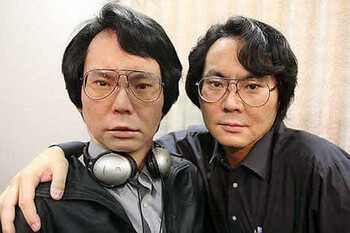
Types of robots include those designed to look and act like people, that is humanoid, and are more commonly called Human Robots. These are generally more complex than other types of robots which are only mechanical. A human robot must have a degree of independence to be so categorized. Mechanical robots may be self propelled, but a human robot requires sensors to receive and process information also look at, Thunder Tiger Models about its environment. look at, DIY Bathroom It will be programmed to use this information have a look at, RC Race Car to avoid walking into objects or people, for example. While both the mechanical and humanoid types of robots can be designed to complete tasks that would be difficult or dangerous for most people to do, Human Robots are capable of not only doing it independently, but in a manner that imitates the human form.
The development of Human Robots has required research into many areas of biology, neurology, as well as the electronic and physical forces they employ. Of all their potential benefit to humanity, this expanding scientific knowledge may contribute the most. In an effort to improve Human Robots, for example, progress has been made in designing better leg and arm prostheses. Space exploration, which utilizes the technology extensively, may one day conduct missions without the costly process of retrieving apparatus. Another anticipation is that Human Robots will provide needed assistance and companionship to the sick and elderly.
Robots have entertained millions of people at Universal Studios and Disney attractions. These animatrons, as they are called, are very difficult to determine from real people. However, since they are not autonomous, they cannot be classified as Human Robots.
The complex system of sensors, required by Human Robots are classified much like human senses which they replicate. Proprioceptive sensors measure position, like the inner ear look at, Model House helps us maintain balance. Robots have devices that measure inclination, calculate speed, and detect force of contacts. Exteroceptive sensors measure distances to objects in the environment. checkout, RC Dancing Robot They are the eyes, ears consider, Remove The Heavy Loads By Hiring The Interstate Removalists Melbourne and fingers of a robot, and are accomplished by, cameras, try, DIY Kitchen microphones, sonars, bumpers and feelers of Human Robots.
Actuators, which cause the movements of robots, may be similar to other types of robots, but what set humanoids apart is their capacity for planning and control. This is the logic system which determines the resulting actions in response to the sensory data.
 DIY Bathroom Floor DIY Bathroom Floor
DIY bathroom floor projects might not seem like an exciting prospect, but tackled in an imaginative |
 Digital Sports Photography Digital Sports Photography
Digital sports photography is action packed and will probably take lots of energy from you as a phot |
 RC Battleships RC Battleships
RC battleships are an interesting genre of radio controlled models that are beautiful to look at and |
 Boat Building Boat Building
Boat building is a hobby which can get as expensive and huge as one wants it to be. With an extensiv |
 Catamaran RC Boat Catamaran RC Boat
Catamaran RC Boats are one of the most popular models of RC boats sold today. Capturing the reality |